- Home
- Plan & Protect
- Fraud & ID Theft Protection
Fraud & ID Theft Protection
Don't Face
Fraud Alone
Report a lost card, stop payment on stolen checks, or recover from identity theft with guidance from CCCU.

Report a Problem Right Away

CCCU Member Connections
(800) 223-2801 or (651) 225-2700
7:30 AM to 5 PM CT
Lost or Stolen Debit Card
U.S.: (855) 448-8198
International: 1 (727) 571-2200
Lost or Stolen Credit Card
U.S.: (866) 820-5862
International: 1 (727) 571-2200
What Do You Need Help With?
Here's What to Do Next
What should I do if my card is lost, stolen, or misused?
If your card is lost, stolen, or used without your permission, report it right away and review your recent transactions.
Debit and ATM cards
- During business hours, call (800) 223-2801 or visit a branch. A branch can reissue your debit card immediately, or one can be mailed to you in 7 to 10 business days. Replacement ATM cards arrive by mail in 7 to 10 business days.
- After hours, call (855) 448-8198 in the U.S. or 1 (727) 571-2200 internationally.
- Check your activity in the CCCU app, online banking, or ATLIS at (651) 225-2772 or (800) 952-8527.
If you find transactions you didn't make:
- File a police report where the theft happened if you're asked to, and keep the report handy.
- Contact the merchant where each transaction happened, and note how it was processed and who you spoke with.
- Call (888) 918-7313 to file a fraud claim.
- Complete, sign, and return the Affidavit of Fraud and Forgery you'll receive by mail.
Credit cards
- Call (866) 820-5862 in the U.S. or 1 (727) 571-2200 internationally.
- Have ready where the card was lost or stolen, your most recent transactions, and police report information. If the card was stolen, file a police report.
- If there's fraud on the card, complete, sign, and return the fraud affidavit you receive.
You have 60 days to notify us of a fraudulent transaction on your statement and provide the necessary information regarding the transaction. After this time, we cannot guarantee that you will receive credit for the unauthorized transaction.
How do I dispute a purchase I authorized?
A purchase dispute covers a transaction you approved whose terms weren't met, such as an item that never arrived or wasn't as described.
- Contact the merchant first and make every effort to resolve it. Follow the purchase terms and return policy, and keep receipts, detailed notes, and written messages.
- If it's still unresolved, call (855) 448-8198 for a debit card dispute or (866) 820-5862 for a credit card dispute.
Disputes will only be accepted going back 60 days from the statement date. Proof of purchase and correspondence to the merchant may be required by Mastercard. You must respond to all correspondence within 15 days. The outcome is not guaranteed by CCCU, but is determined by Mastercard.
What if someone used my checking or savings account information?
An unauthorized ACH transaction uses your routing and account numbers to withdraw money without your permission.
- Contact the company or merchant that processed the transaction. Record the date and time, who you spoke with, and whether it was processed by phone, in person, or online.
- Call CCCU or visit a branch to complete a Written Statement of Unauthorized ACH Debit.
You have 60 days to notify us of a fraudulent transaction on your statement and provide the necessary information regarding the transaction. After this time, we cannot guarantee that you will receive credit for the unauthorized transaction.
What should I do if my checks are stolen or forged?
Stolen or forged checks should be reported to CCCU right away so you can stop payment and protect your account.
- File a police report where the theft happened, and keep the case number. You'll need it to stop payment.
- Note the range of stolen check numbers if you can, along with the last check you wrote, who it went to, and the amount.
- Call (800) 223-2801 or visit a branch to stop payment, with your police case number ready.
- If a stolen check is used, sign an Affidavit of Forgery for it.
- Alert the check verification companies: TeleCheck at (800) 710-9898, Scan at (800) 262-7771, ChexSystems at (800) 842-5880, and Certegy at (800) 437-5120.
- Visit a branch if you'd like to close the affected account and open a new one.
If a check order never arrived, note the check number range if you can, then call or visit a branch to stop payment on the missing checks. If you suspect your mail was stolen or redirected, notify the Postal Inspector at your local post office.
You have 60 days to notify us of a fraudulent transaction on your statement and provide the necessary information regarding the transaction. After this time, we cannot guarantee that you will receive credit for the unauthorized transaction.
What should I do if my wallet or Social Security card is stolen?
A stolen wallet can expose several accounts at once, so work through this checklist to find what's missing and report it.
- File a police report where the theft happened.
- List the cards, checks, IDs, and anything else that was inside.
- Figure out which checks were taken, and call to stop payment on them.
- Cancel any debit, ATM, or credit cards, using the numbers at the top of this page.
- Contact one credit bureau to place a fraud alert. That bureau must notify the other two.
- If your Social Security card was taken, request a replacement card from the Social Security Administration at ssa.gov. Report any misuse of your number to the SSA Office of the Inspector General Fraud Hotline at (800) 269-0271.
- Visit the Department of Motor Vehicles for a new driver's license.
- Close any affected accounts and reopen them with new account numbers. Bring a record of your automatic deposits and payments.
- Call Scan at (800) 262-7771 to find out whether bad checks are being passed in your name.
- Report a stolen checkbook to TeleCheck, Certegy, and ChexSystems, using the numbers in the checks section above.
What should I do if I've been scammed or shared account information?
If you've been scammed or shared account information with someone you don't trust, stop contact and call CCCU right away.
- Stop sending money and end all communication with the suspected scammer.
- Call (651) 225-2700 or (800) 223-2801 so we can help protect your accounts.
- Review your account for transactions you didn't authorize, and keep any messages, receipts, and notes about what happened.
- Report the scam to the FBI's Internet Crime Complaint Center at IC3.gov.
- If you need to cancel a real service or purchase, contact the company through a channel you've verified yourself, and note what they tell you. Don't resume contact with a suspected scammer.
What should I do after identity theft or a data breach?
Identity theft means someone used your personal information without permission. A data breach exposes your information, and it calls for close monitoring even if you haven't found fraud yet.
If someone stole your identity
- Call the companies where the fraud happened. Ask for the fraud department, explain that your identity was stolen, and ask them to close or freeze the accounts. Then change your logins, passwords, and PINs.
- Place a fraud alert and get your credit reports. A free initial fraud alert lasts one year. Contact any one bureau, such as Experian at (888) 397-3742, and it must notify the other two. Then get your free reports at AnnualCreditReport.com or (877) 322-8228.
- Report the theft to the FTC at IdentityTheft.gov or (877) 438-4338. If you create an account, the FTC saves and updates your recovery plan. If you skip the account, print and save your Identity Theft Affidavit and recovery plan before you leave the site.
- File a report with your local police. Bring your FTC Identity Theft Affidavit, a photo ID, proof of address such as a mortgage statement, lease, or utility bill, and any other evidence, like bills or IRS notices.
Credit bureaus: Experian (888) 397-3742, TransUnion (800) 680-7289, Equifax (888) 766-0008
Steps for specific accounts
- Utilities: Contact the provider about any service opened in your name.
- Phones: Request your NCTUE Data Report at nctue.com or (866) 349-3233, and check for accounts you don't recognize.
- Government benefits: Contact the issuing agency, and ask how to correct the fraud and restore any interrupted benefits. You may need to appear in person or write to them.
- Checking accounts: Request your ChexSystems report at chexsystems.com or (800) 428-9623, and ask every institution involved to close accounts opened in your name. If someone is writing bad checks on your account, ask your financial institution to stop payment and report the theft to its check verification system, and contact any business that took a bad check before it starts collection. If a business rejects your check, ask what information led to the rejection.
- Apartments or house rentals: Ask the landlord which tenant screening service they used, then request your report and correct the fraudulent information with that service.
If your information was exposed in a breach
- Review your credit reports and watch your existing accounts for activity you don't recognize.
- Consider a credit freeze, which makes new accounts harder to open in your name but won't stop charges on existing accounts.
- Consider a fraud alert, especially if you decide against a freeze.
- File your taxes as soon as you have the information you need, and respond promptly to any letter from the IRS.
- Visit IdentityTheft.gov for recovery steps if you find signs of identity theft.
How can I protect myself from fraud and identity theft?
Protecting yourself from fraud and identity theft starts with questioning requests before you share information and checking your accounts for activity you don't recognize.
Online and on your devices
- Type website addresses into your browser instead of following links in unexpected emails.
- Open links and downloads only from people and companies you know and trust.
- Never email personal or financial information, and never return a call that asks for it.
- Never share your card's security code with anyone claiming to represent a financial institution.
- Skip online banking on public computers and public Wi-Fi.
- If a message asks you to log in to verify your online banking information, call CCCU to report it.
- Look for a lock symbol and "https" at the start of a site's address before you log in.
Everyday habits
- Ask how your personal information will be used, and whether it will be shared, before you give it out.
- Notice when a bill doesn't arrive. A missing credit card statement can mean someone changed your address.
- Review your statements monthly, and report any transaction you didn't authorize right away.
- Carry only the cards you need, and keep your Social Security card at home unless you need it.
- Share personal information only when you started the contact and know who you're talking to.
- Shred receipts, credit applications, insurance forms, checks, and statements before you throw them away.
- Be wary of promotional offers that ask for personal information.
Investment scam warning signs
- Verify any person or firm at Investor.gov instead of clicking links they send you.
- Ignore any offer that promises guaranteed profits. Every real investment carries some risk.
- Be cautious of anyone you meet online who offers to teach you to invest or asks to move the conversation to another app.
- A real company will never ask you to send more money to unlock your investment or pay fees to withdraw it.
- If someone asks you to keep a transaction secret or not tell CCCU, stop all contact.
Your credit report
Members 18 and older can view their full credit report anytime through SavvyMoney in the CCCU app or online banking. You can also get free reports at AnnualCreditReport.com.
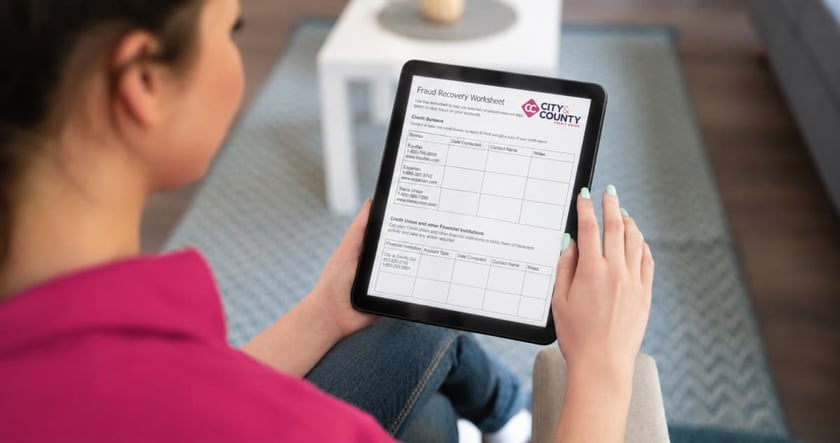
Track Each Step of Your Recovery
Use the Fraud Recovery Worksheet to record reports, account activity, and the steps you’ve taken to address identity theft.
Let's Take a Closer Look
Call (800) 223-2801 or visit a branch to talk with a CCCU team member about an unfamiliar charge or a message you don’t trust.